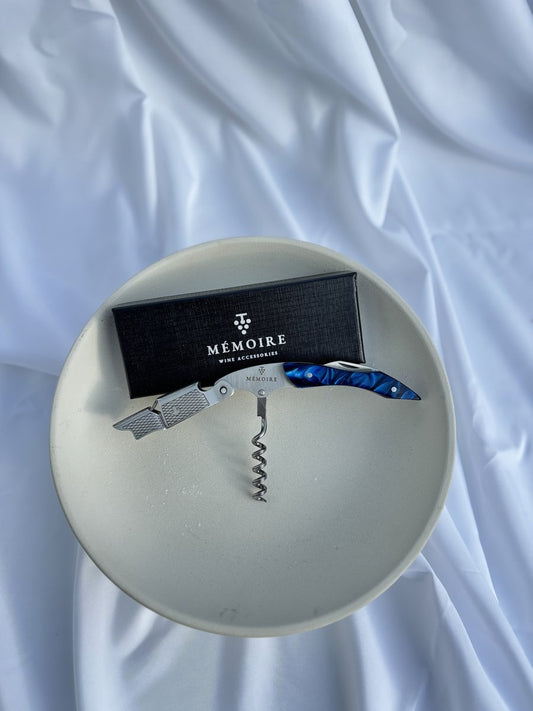
Corkscrew and wine opener by Mémoire
A good corkscrew or wine opener provides control, composure, and a clean opening of the bottle. At Mémoire, you will find classic waiter's corkscrews, luxury wine openers, and models for older or fragile corks. The choice depends primarily on the type of cork, the lever mechanism, and the grip you prefer.
Would you like to choose specifically? View our stainless steel wine openers, wooden wine openers, and resin wine openers. For older or fragile corks, the opener for vintage wines – Deux Dents is a targeted choice.
Corkscrew, waiter's corkscrew, or 2-prong opener?
A classic waiter's corkscrew is compact and suitable for daily use. A luxury corkscrew can offer extra grip, balance, or a more elaborate lever mechanism. For old wine, a 2-prong opener is particularly interesting because it does not pierce the cork. Thus, this collection uses both the terms corkscrew and wine opener for the same point of purchase, without the need for two competing category pages.
What distinguishes a good wine opener
Several aspects play a role in choosing a wine opener. The worm determines how smoothly the cork is pulled and to what extent the cork remains intact. The hinge or lever mechanism affects stability during opening, while the handle and balance are important for comfortable use. A good wine opener feels sturdy in the hand, operates predictably, and helps you remove the cork in a controlled manner, even when the bottle is opened more frequently during dinner or a tasting.
Materials and finish
Many models in this collection are made with stainless steel for strength and durability. Depending on the design, this can be combined with wood, composite, or resin for a pleasant grip and a refined look. With wood types such as rosewood, mahogany, or pakkawood, the texture is visible and the opener feels warm in the hand. Resin and composite handles are generally smoother and less sensitive to moisture, which can be pleasant with regular use. Whichever version you choose, the interplay of the worm, hinge, and handle ultimately determines the ease of use.
Luxury wine opener: design with practical details
A luxury wine opener is characterized not only by its appearance but especially by refinement in operation. Think of a carefully sharpened worm, a solid pivot point, and an integrated foil cutter for removing the capsule. Such details make opening more consistent and reduce the chance of the cork breaking or crumbling. For those who like to assemble wine accessories as a whole, it makes sense to combine your opener with matching items from the accessories collection, such as tools for serving and storing.
For young wines and older corks
Not every bottle requires the same approach. A classic waiter's corkscrew is suitable for many daily moments and offers a compact, reliable solution. For bottles with older, drier corks, an opener with a modified technique can provide extra security, as the cork is under less strain. In the product information for each model, you can read which mechanism is used and for which situation it is most suitable. When you like to let wine breathe first, an opener can also go well with a decanting solution from the decanting carafes collection.
A complete wine experience at the table
A wine opener is often the start of the serving moment. After that, glassware and presentation play a role in how you experience the wine. At Mémoire, you can therefore easily look further for suitable glassware via the wine glasses collection. This way, opening, pouring, and tasting align with each other, with accessories chosen for their functionality and finish.
In this category, you will find various designs, from compact waiter's corkscrews to models that provide extra support during opening. By paying attention to the mechanism, material, and grip, you can choose a wine opener that suits your use and the bottles you open most often.
Would you like to compare different types? Then read our guide best corkscrew 2026: 5 types compared.
Frequently asked questions about wine openers
What should I look for when choosing a wine opener?
The worm determines how smoothly the cork is pulled and whether the cork remains intact. The hinge or lever mechanism affects stability, while the handle and balance ensure comfortable use. A good wine opener feels sturdy in the hand and works predictably, even with repeated use.
Which materials are used for Mémoire wine openers?
Most models are made with stainless steel for strength and durability. This is combined with wood, composite, or resin for a pleasant grip. Wood types like rosewood or mahogany feel warm in the hand, while resin and composite handles are smoother and less sensitive to moisture.
What makes a luxury wine opener different?
A luxury wine opener is distinguished by refinement in its operation: a carefully sharpened worm, a solid pivot point, and an integrated foil cutter. Such details make opening more consistent and reduce the chance of the cork breaking or crumbling.
Which wine opener should I use for bottles with older corks?
A classic waiter's corkscrew is suitable for most daily moments. For bottles with older, drier corks, an opener with a modified mechanism offers extra security, because the cork is under less strain during opening. In the product information for each model, you can read which situation it is most suitable for.
What do I combine a wine opener with?
A wine opener is often the start of the serving moment. Combine it with a decanting carafe if you want to let the wine breathe first, and choose suitable glassware for a neat presentation at the table. Within the Mémoire range, you will find accessories that match in the same style.
Comparing specific openers? See the Élitaire two-lever wine opener and the Couteau Sommelier corkscrew to choose a style that suits your wine service.
Read how a wine opener works and which type suits you.
Which wine opener suits your cork?
Choose by cork condition, mechanism and comfortable grip rather than appearance alone.
Opening an older bottle with a fragile cork
A standard waiter's corkscrew often works well for sound natural corks. If a cork seems brittle, a two-prong opener may offer a gentler alternative because it does not pierce the cork. No opener can guarantee that a damaged cork will not crumble. Compare the Deux Dents and Élitaire mechanisms before choosing.


 Sold out


